
A cat can make a room feel like home. It can also make the same room feel as though something unseen has just entered it. In historical art, that ambiguity is part of the attraction: cats are close enough to us to be familiar, yet independent enough to remain difficult to read.
The cat artworks in Dark Gloomy Art’s fine art print collection move between affection, comedy, fantasy and unease. Some put the animal at the centre of the story; others hide it in a shadow or among the rooftops. This illustrated journey brings together eight paintings and illustrations, from intimate domestic scenes to theatrical moonlit rooftops. Each image links to its corresponding fine art print in the shop.
Why Cats Change The Mood Of A Picture
Before deciding what a cat symbolises, look at what it does. Is it meeting our eyes, ignoring the people around it, or slipping away? Does its body echo a human gesture, or disturb the order of a room? A black silhouette against pale cloth can dominate an image; a barely visible animal in a dark corner can make us look twice.
These works do not offer one universal meaning for cats. Instead, they show how a familiar animal can become a companion, a comic stand-in for human behaviour, or the small detail that makes a scene mysterious. Follow those changes and the collection becomes more than a gathering of charming subjects: it becomes a study of how artists direct our attention.
Black Cat: A Small Presence In A Large Bed
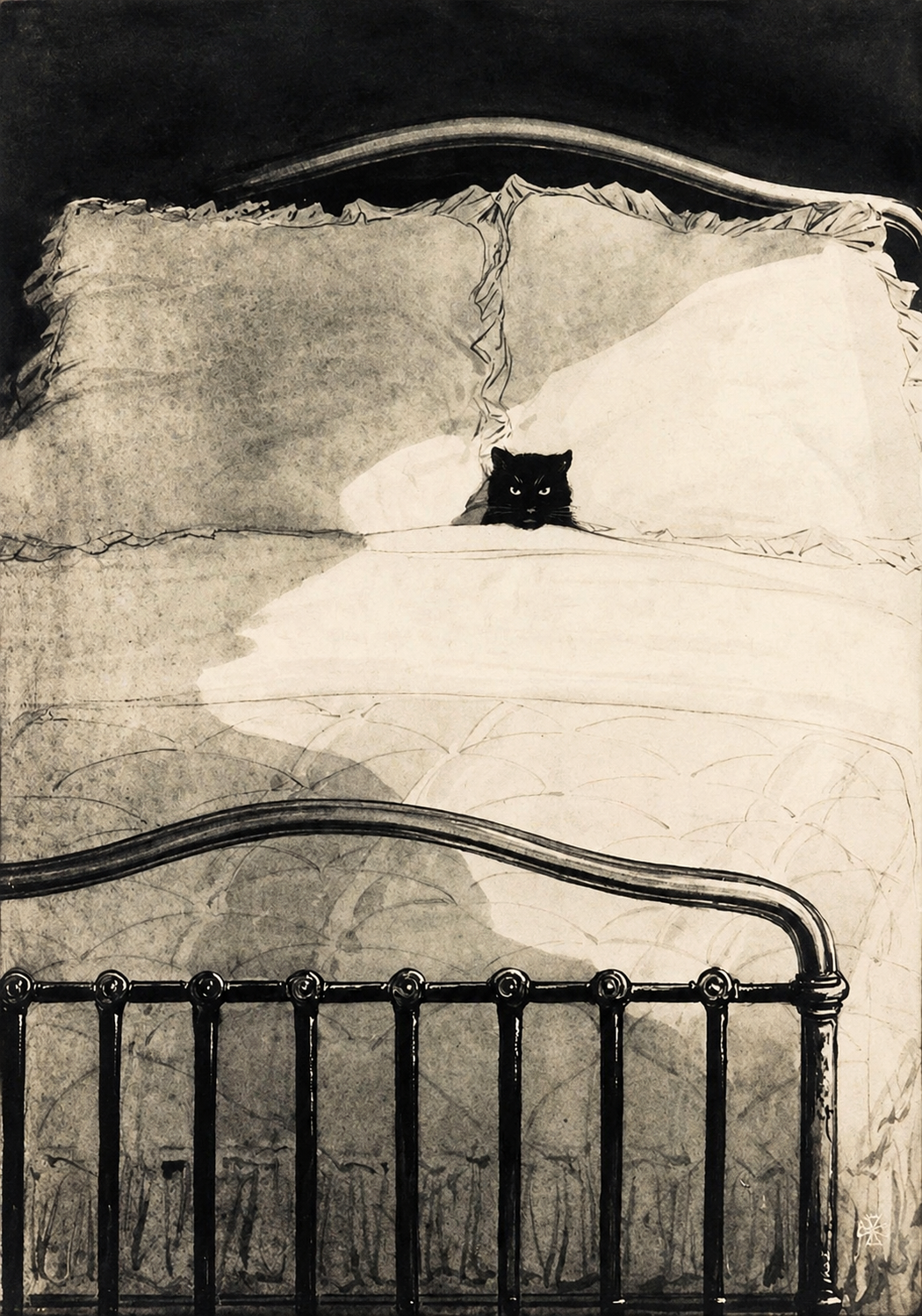
The first surprise is how little of the cat we can see. Pale bedding fills the composition, while a small dark head appears among the covers. The bed seems enormous around it. Rather than making the animal grand or heroic, the image lets its size become the joke: a tiny occupant has quietly taken possession of an entire human space.
Look again and the contrast does something subtler. The white folds draw us inward, but the dark face becomes the point we return to. Anyone who has discovered a cat in a freshly made bed will recognise the situation. Here, domestic familiarity becomes a carefully staged encounter between texture, scale and a watchful gaze. It is an intimate beginning to a collection in which cats rarely stay in the background.
Explore The Black Cat Fine Art Print
An Unexpected Companion: Woman With A Cat On Her Shoulder
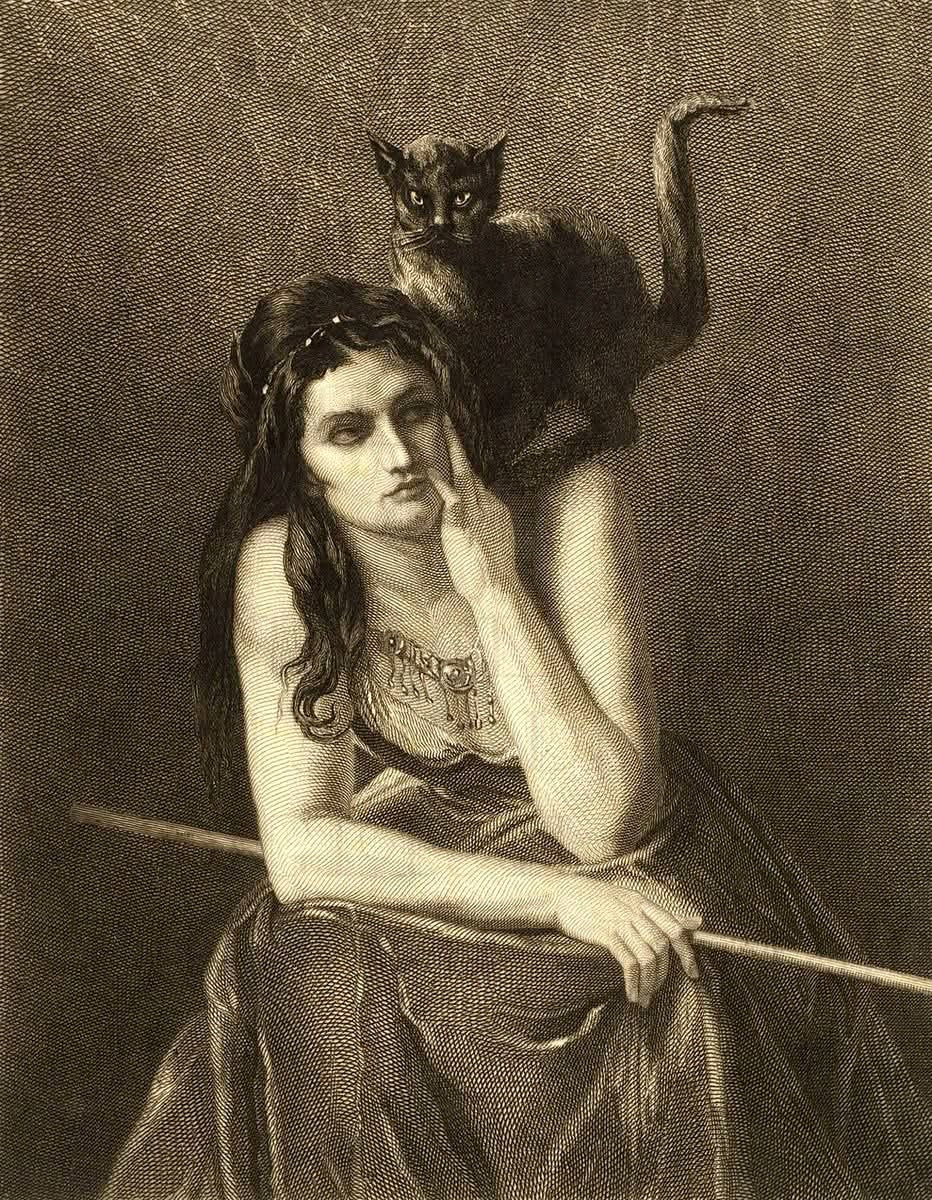
In Danse’s image, the woman rests her face against her hand while the cat occupies the space beside her head. Their closeness makes the animal part of the portrait’s structure. Its dark silhouette interrupts the softer tones around her, drawing attention to the shoulder and face rather than to a decorative corner of the room.
The appeal lies in that unequal partnership. The woman appears absorbed in her own thoughts; the cat seems alert to another world. We need not invent a story about who they are to feel the difference. This is one of the most rewarding ways to look at cats in historical art: notice where the human attention goes, then ask whether the animal is looking somewhere else.
Explore The Woman With a Cat on Her Shoulder Fine Art Print
Affection With An Awkward Edge: Pierrot And The Cat
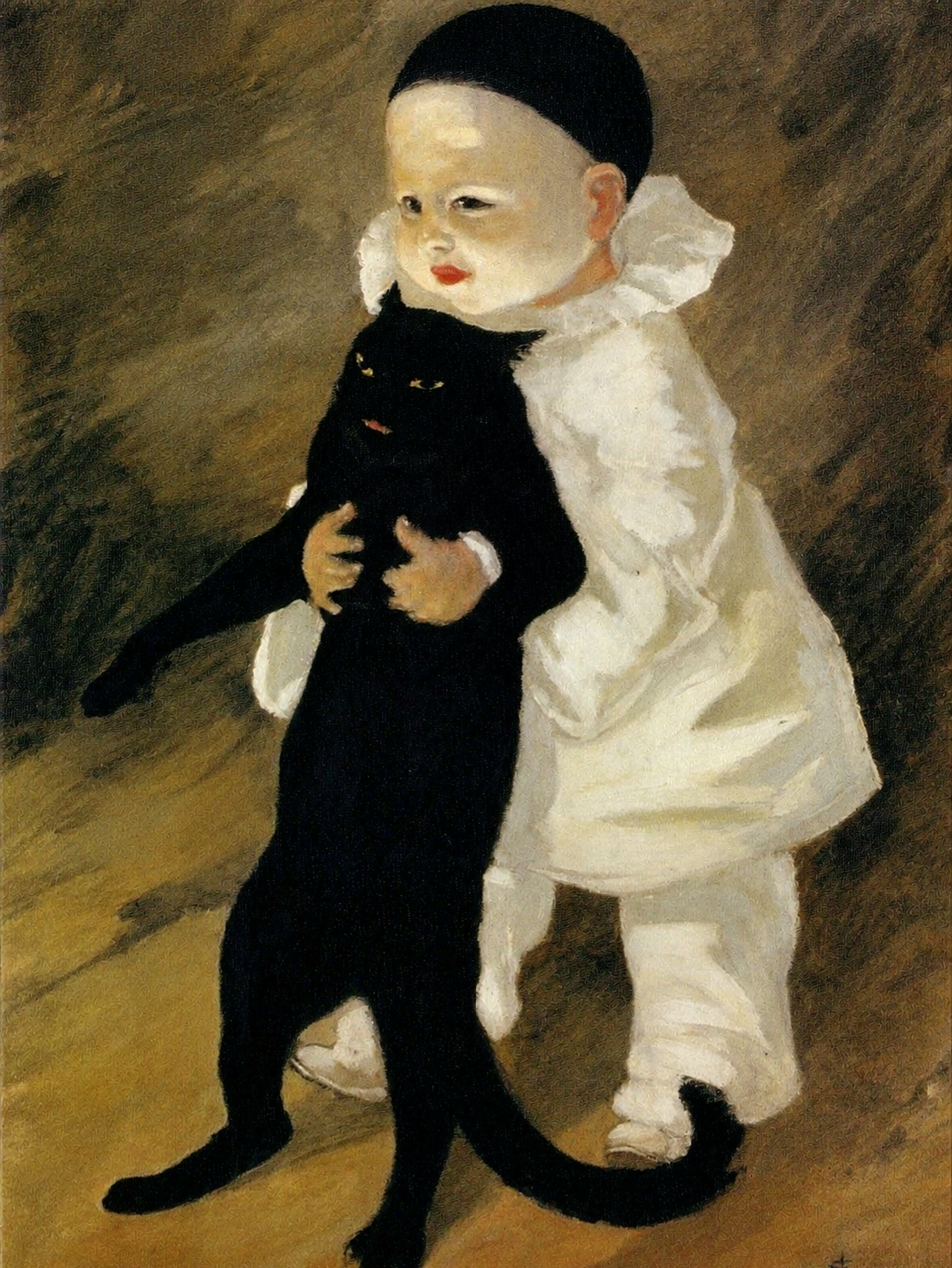
A small figure in a pale Pierrot costume holds a large black cat against a warm background. The costume and the animal create an immediate light-and-dark pairing, but the cat refuses to become a neat shape. Its body stretches down, its tail curls, and its weight gives the scene an almost physical awkwardness.
That awkwardness is what makes the image affectionate. The child’s intention and the cat’s body do not quite agree. Steinlen’s subject is recognisable as a moment rather than an idealised pose: the effort of holding something loved that remains thoroughly itself. For a wall of darker art, the warmth of the background offers a gentler note without losing the striking presence of the black cat.
Explore The Pierrot and The Cat Fine Art Print
When The Familiar Becomes Frightening: Cats Nightmare
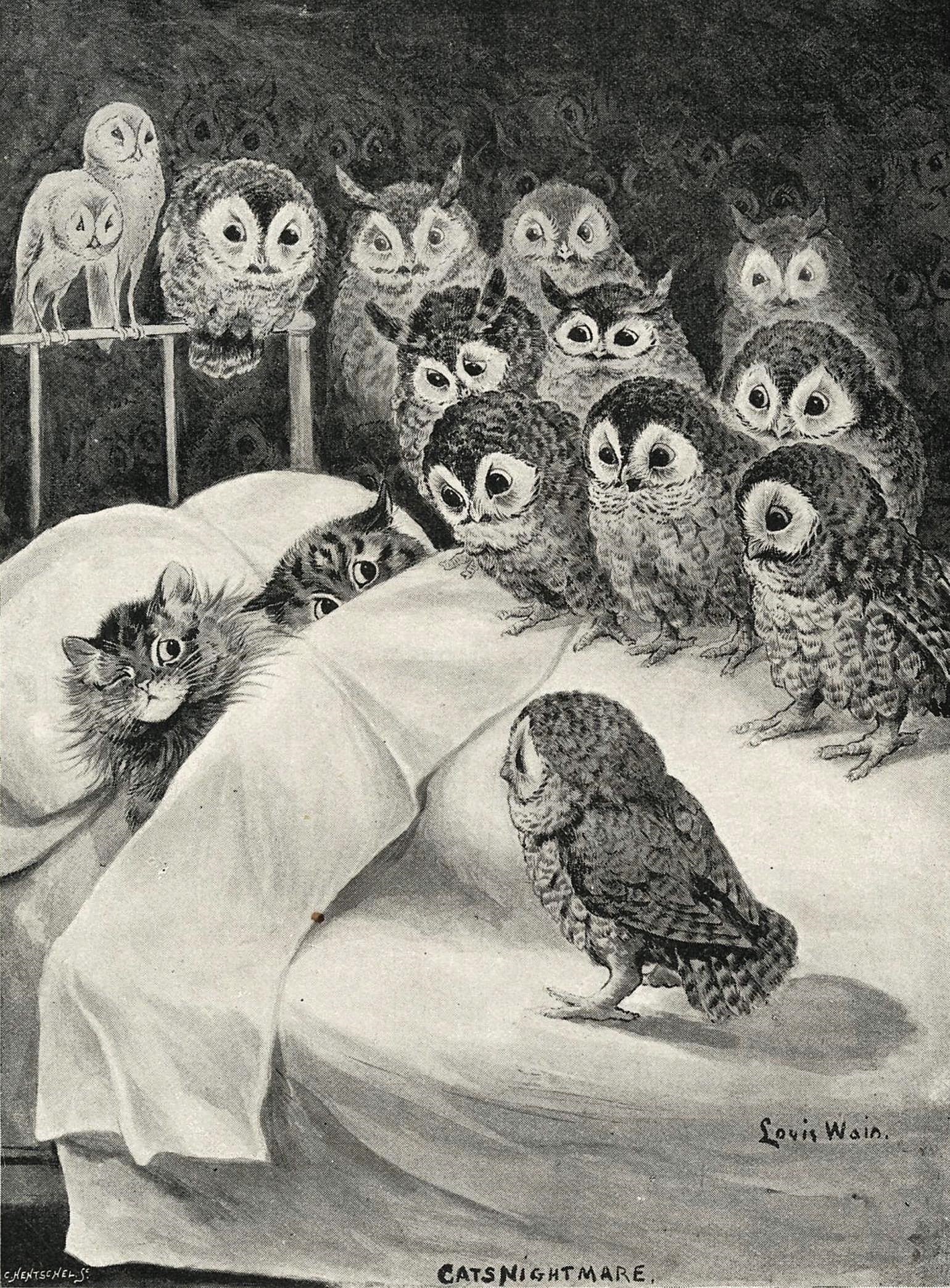
Wain reverses the comfort of the bedroom. His cats are tucked into bed, yet a crowd of owls surrounds them with enormous, staring eyes. The setting promises safety; the visitors turn it into a theatre of alarm. It is funny partly because the fear is so legible. These cats react with an intensity we recognise in ourselves.
The V&A notes that Wain’s close observation of his own cat, Peter, helped direct his attention towards feline subjects. In this work, recognisable animal features become a language for human feeling. There is no need to treat the image as a diagnosis or a private confession. Its visual joke is strong enough: even a comfortable bed cannot protect its occupants from an imagination working overtime.
Explore The Cats Nightmare Fine Art Print
The Cat As Performer: Puss In Boots
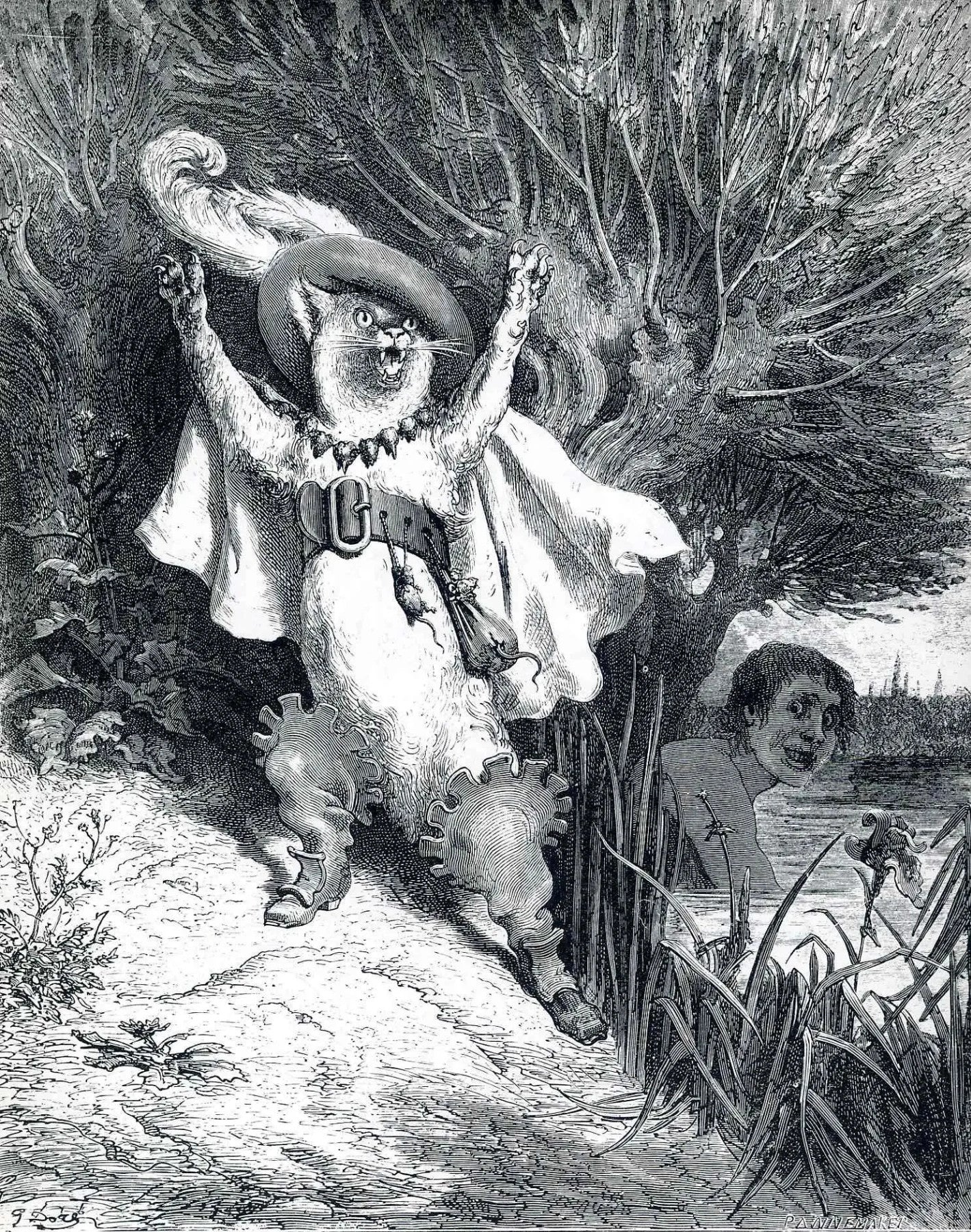
Doré gives the cat a different kind of human role. Dressed in boots and an elaborate hat, it gestures with the confidence of an actor commanding a stage. The trees and smaller figure in the water give the scene depth, yet the eye returns to that animated central performance.
Unlike the companion cats, this animal does not simply share a human setting: it appears ready to direct events. Costume makes the transformation explicit, while the feline face keeps the fantasy lively. This is the cat as resourceful storyteller and theatrical presence, a useful reminder that historical cat art can be mischievous as well as mysterious. The detailed monochrome image rewards a slower look at the gestures and surrounding landscape.
Explore The Puss in Boots Fine Art Print
A Darker Domestic Story: The Cat’s Paw
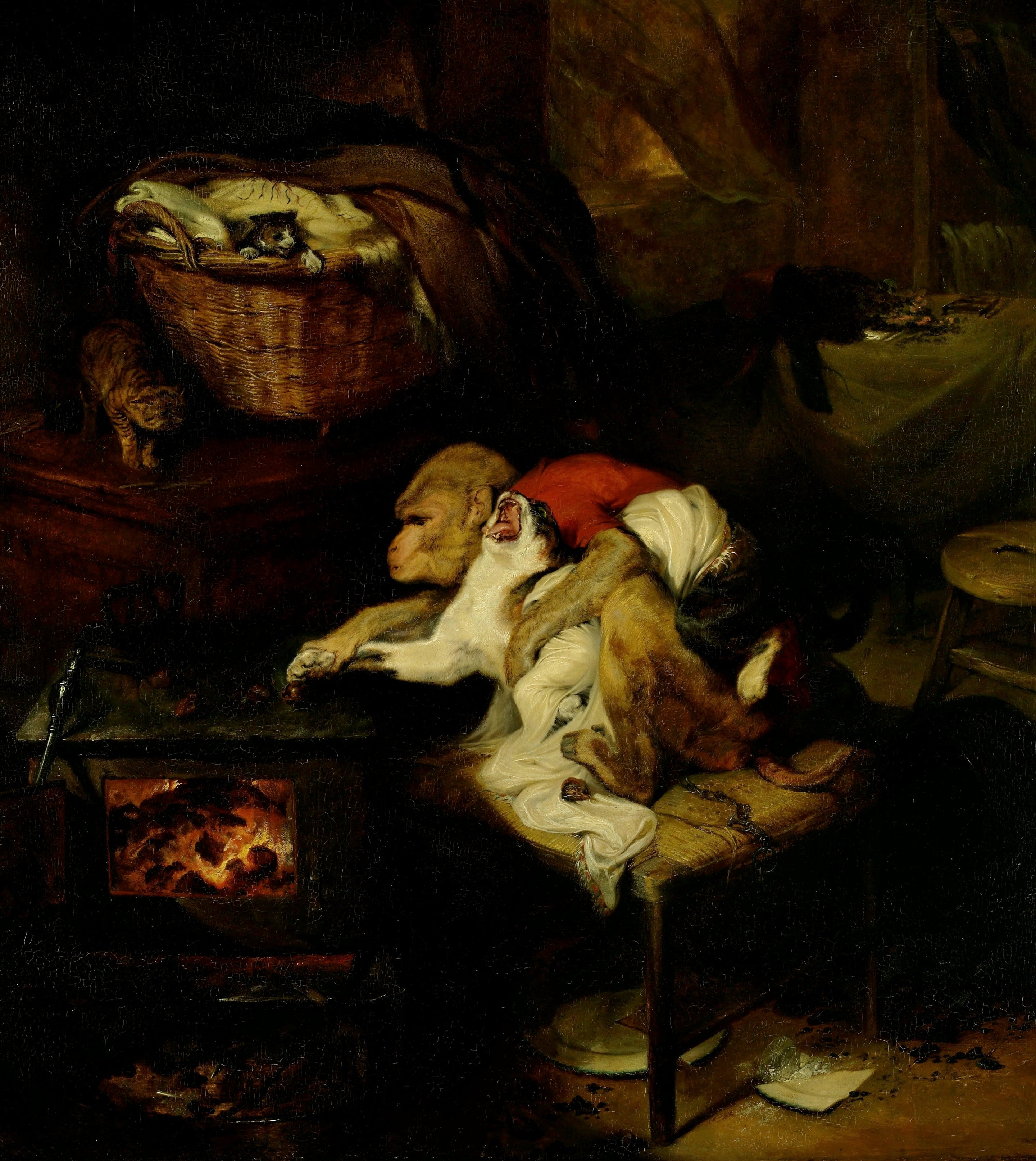
Warm colour does not always mean a comforting scene. Landseer places his animals beside a glowing stove, but the monkey’s grip on the cat turns the room into a struggle. The cat’s tense body and the direction of its paw bring attention to vulnerability rather than companionship. Nearby kittens make the domestic setting feel more charged.
The painting asks us to read relationships through movement: who holds whom, who has control, and who bears the danger. Its appeal is more complicated than that of an amusing animal picture. Among the works here, it is a particularly sharp example of how a cat can carry the emotional weight of a scene. The fire illuminates an imbalance of power as much as it lights the room.
Explore The Cat’s Paw Fine Art Print
The Watcher At The Fortune Teller’s Shoulder
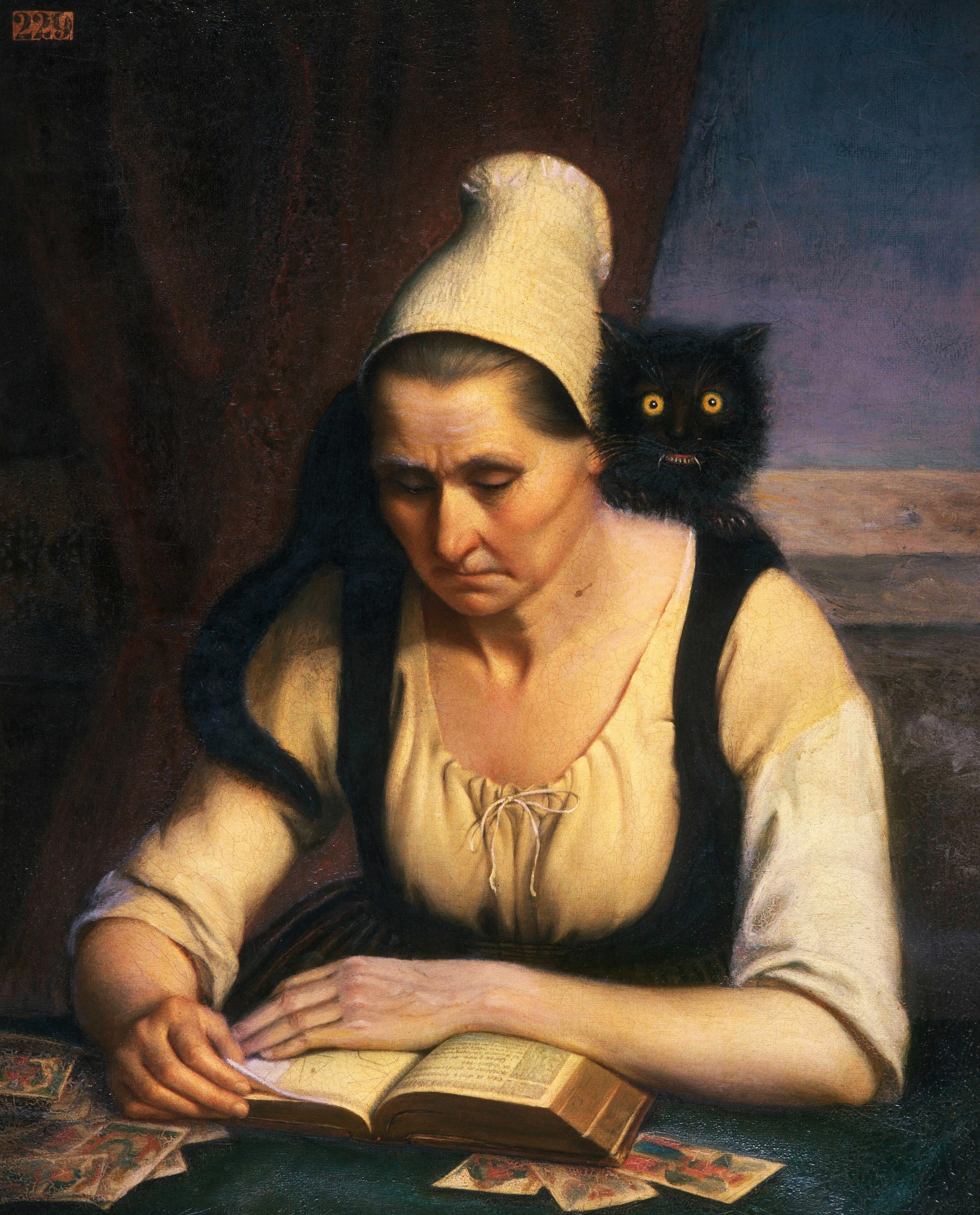
A woman bends over a book, with cards spread before her. Across her shoulders lies a black cat whose bright eyes look outward. The contrast is immediate: she studies the page while the animal seems to register our arrival. Its face becomes a second point of awareness within the painting.
The title supplies the occult setting, but the atmosphere depends on ordinary visual decisions: dark fabric, concentrated light, a bent head and an unwavering pair of eyes. The cat makes the scene feel inhabited by more than one kind of attention. We can enjoy that suggestion without assigning a fixed supernatural meaning to the animal. Its strongest role may be as the watcher who notices what the reader does not.
Explore The Fortune Teller Studying a Book of Necromancy Fine Art Print
After Hours: Cats On Roof At Full Moon
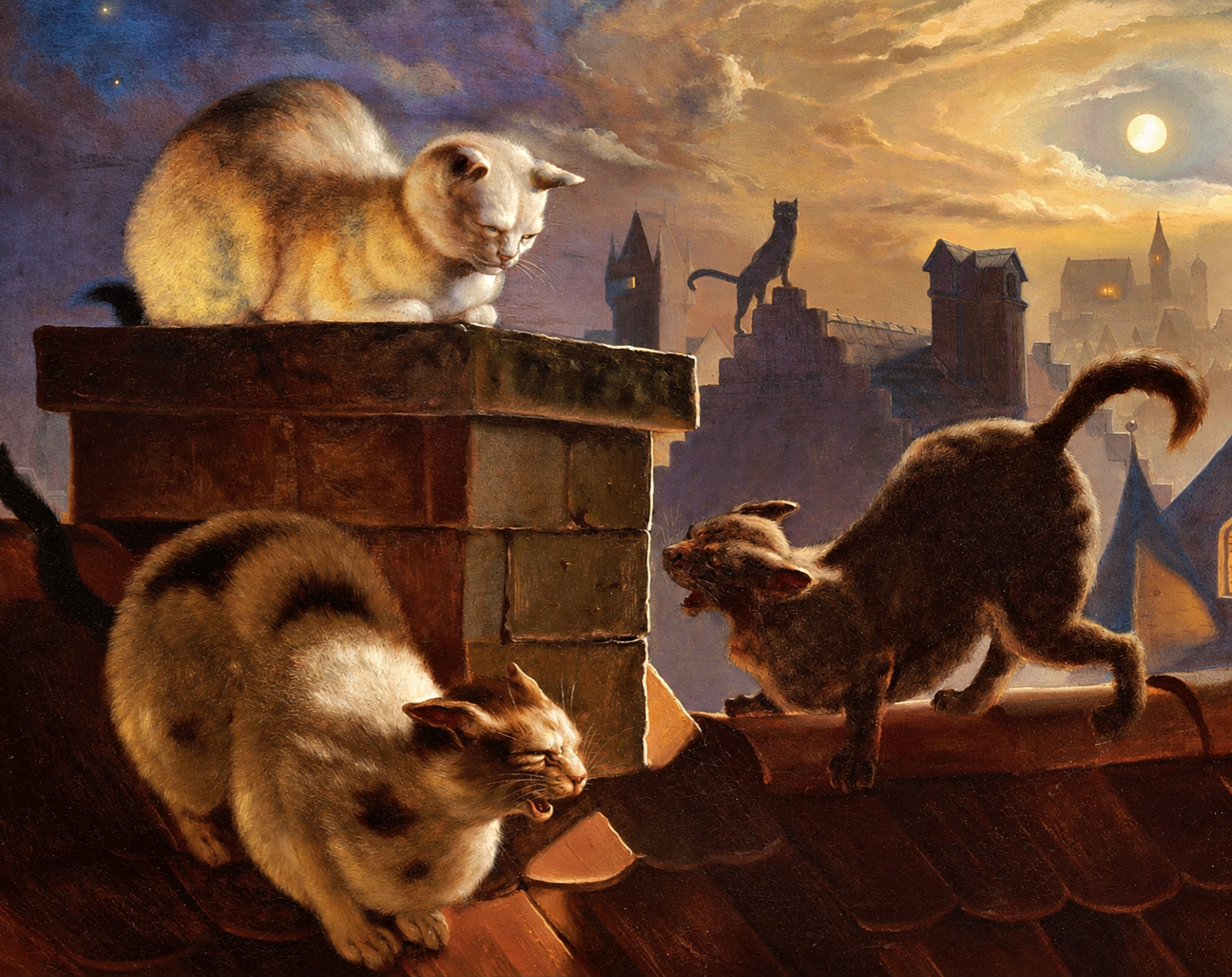
Flinzer moves us outside, where rooftops become a stage that seems to belong entirely to cats. A chimney gives one animal a high perch; others occupy the roofline, and a smaller silhouette extends the gathering into the distance. The full moon supplies a luminous counterpoint to their varied poses.
Rather than a single portrait, this is a little society. Different heights, colours and attitudes keep the eye travelling across the picture. The architecture looks familiar, yet its usual human occupants have disappeared. That shift is central to the charm of nocturnal cat art: a place we know becomes another creature’s territory after dark. This is a natural companion to the night paintings explored elsewhere in our journal.
Explore The Cats on Roof at Full Moon Fine Art Print
A Wilder Relative: Ferdinand Schebek’s Tiger
For readers drawn to the wider feline family, the collection also includes Ferdinand Schebek’s Tiger, catalogued to the twentieth century. Its close view of an open mouth and striped face exchanges the domestic cat’s ambiguity for immediate force. It makes an expressive contrast to the small, watchful animals above.
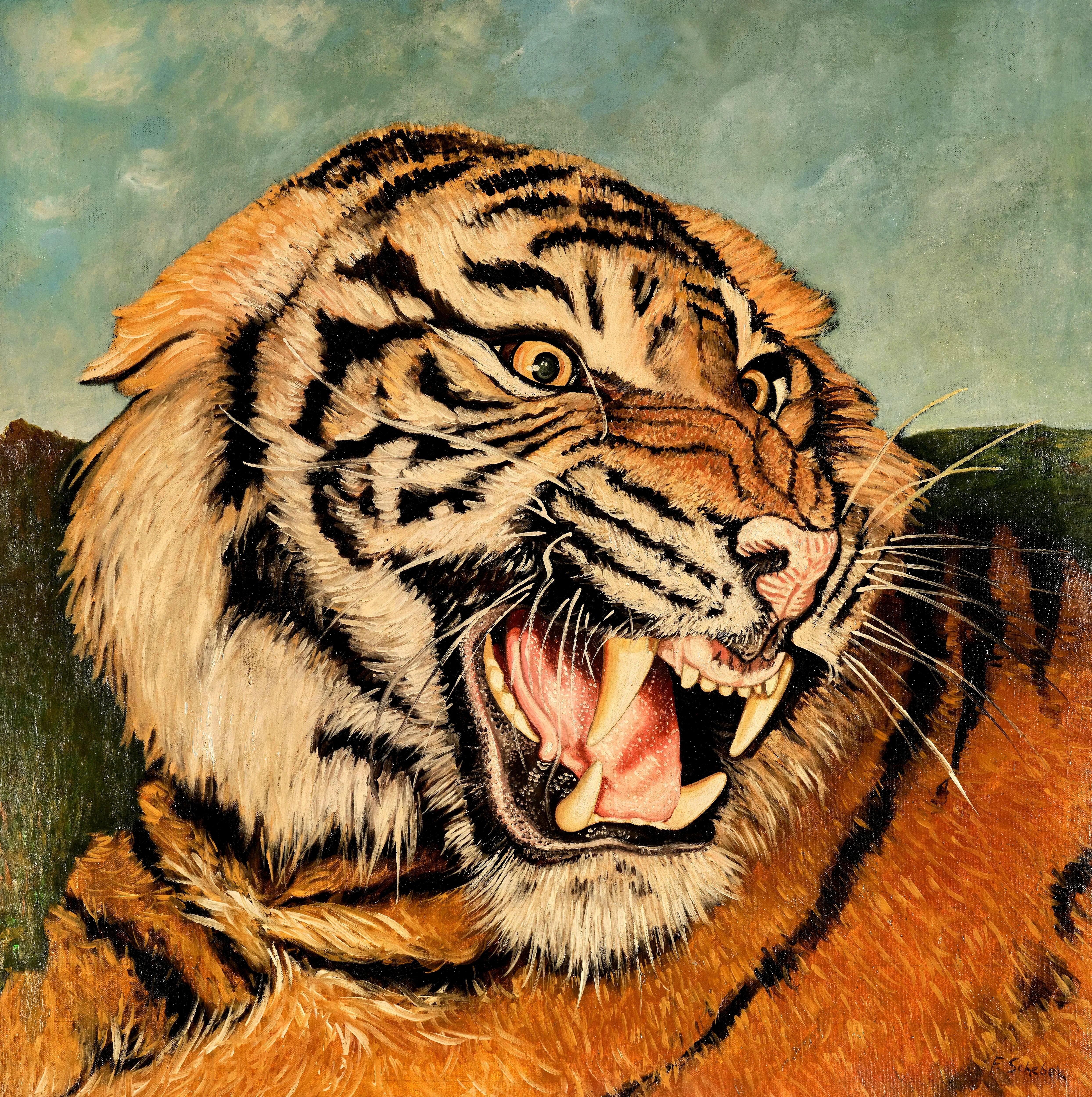
Explore The Tiger Fine Art Print
Choosing A Cat Artwork For Your Walls
Begin with the atmosphere you want to live with. Steinlen and Danse offer companionship with personality. Wain brings humour edged with unease. Dondey rewards a taste for shadow and mystery, while Flinzer turns a rooftop into a lively nocturnal world.
For a small grouping, consider pairing different treatments rather than matching subjects too closely. A detailed monochrome illustration beside a warmer painting lets line and colour speak to each other. Alternatively, let one cat artwork sit among landscapes: its living presence can change how the surrounding pictures feel. Check the individual fine art print pages for available sizes and current product details before choosing.
If the moonlit setting is what draws you in, continue with After Dark: Why Night Paintings Draw Us In. For now, look once more at the cats themselves. Whether occupying a bed, watching over a reader or gathering on a moonlit roof, they rarely feel like incidental decoration. They seem to have arrived with a purpose of their own.
Notes And Further Reading
Artwork titles, artist attributions and dates above follow the shop catalogue; these are not presented as independent provenance research. “Black Cat” is listed with the name “Porte Veine”; no artist attribution is asserted here. The discussion of composition and mood reflects our reading of the images.
For more on Louis Wain’s feline subjects, see the V&A’s introduction to his cat drawings.